
Der Doomsday Bären-Thread
| eröffnet am: | 30.01.06 01:03 von: | Anti Lemming |
| neuester Beitrag: | 05.12.21 09:12 von: | 123p |
| Anzahl Beiträge: | 3607 | |
| Leser gesamt: | 532217 | |
| davon Heute: | 81 | |
bewertet mit 80 Sternen |
||
|
|
||

Wohlgemerkt ist Ritholtz (Autor von Posting 2 in diesem Thread) kein Permabär; er war bis 2005 bullisch für Aktien gestimmt.
Insbesondere die Zahlen im Artikel (rot) muss man sich mal auf der Zunge zergehen lassen: 15,2 % aller Amerikaner, die 2005 ein Haus gekauft hatten, sind damit bislang mehr als 10 % in Minus gefallen (negative home equity): D. h. sie schulden der Bank deutlich mehr, als das gekaufte Haus jetzt noch wert ist. Gleichzeitig haben 43 % dieser Käufer ihre Häuser ohne jegliches Eigenkapital gekauft - was wegen des gefallenen Gegenwerts Zwangsversteigerungen heraufbeschwört. Und all dies geschah 2005, als der Housing-Markt austoppte!
Is a Housing Crisis Approaching?
Barry-Ritholtz-Blog
(Der Beitrag basiert auf einem Artikel im US-Magazin "Barron's", der nur für Abonnenten online verfügbar ist.)
Our conversation yesterday -- and the weak Existing Home Sales data -- lead us to an inevitable question: Is a Housing Crisis Approaching?
For some insight into this issue, let's pull some data from a fascinating discussion in Barron's this past weekend. Lon Witter puts forth a different and intriguing notion. Witter observes that we don't have a Housing bubble, what the U.S. has is a lending bubble. His evidence is how loose the lending standards have become, and why not? The banks ultimately just flip the loans to the Fannie Mae (Federal National Mortgage Association, on the NYSE: FNM), where foreclosures and defaults become the headache of buyers looking for greater risk and return.
Witter claims his careful look at the reasons for the rise in housing give a good indication of the impact housing may have on the stock market. He observes the causes (in chronological order) of the rise and ultimate fall of Housing: "The collapse of the Internet bubble, which chased hot money out of the stock market; rock-bottom interest rates; 50 years of economic history that suggested housing never goes down, and creative financing."
More specifically, Witter's expectations are colored by rather disturbing data:
• 32.6% of new mortgages and home-equity loans in 2005 were interest only, up from 0.6% in 2000;
• 43% of first-time home buyers in 2005 put no money down;
• 15.2% of 2005 buyers owe at least 10% more than their home is worth (negative equity);
• 10% of all home owners with mortgages have no equity in their homes (zero equity);
• $2.7 trillion dollars in loans will adjust to higher rates in 2006 and 2007.
Traditionally, mortgages have been low risk lending, as the loan is securitized by the underlying property. When banks were lending less than the value of the property (LTV), to people with good credit, who also were invested in the property (substantial down payments) you had the makings of a very good business: low risk, moderate, predictable returns, minimal defaults.
That model seems to have been forgotten. THIS IS REMINSCENT OF THE S&L CRISIS -- where lenders did not have any repercussions for their bad loans!
As bad as the above numbers look, the thinking behind them is worse:
"Lenders have encouraged people to use the appreciation in value of their houses as collateral for an unaffordable loan, an idea similar to the junk bonds being pushed in the late 1980s. The concept was to use the company you were taking over as collateral for the loan you needed to take over the company in the first place. The implosion of that idea caused the 1989 mini-crash.
Now the house is the bank's collateral for the questionable loan. But what happens if the value of the house starts to drop?"
A good example of how this is unfolding at lending institutions comes from Washington Mutual [= US-Hypothekenbank, A.L.]: You may recall Washington Mutual laid off 2500 employees in their mortgage broker department earlier this year. As LTV went above 100%, and then as property values decayed from recent peaks, the collateralized aspect of these mortgages suddenly is at risk.
Here's how this has played out over the past few years via WaMu's ARM loans (data via Washington Mutual's annual report):
- 2003 year end, 1% of WaMu's option ARMS were in negative amortization (payments were not covering interest charges, so the shortfall was added to principal).
- 2004, the percentage jumped to 21%.
- 2005, the percentage jumped again to 47%. By value of the loans, the percentage was 55%.
So each month, the borrowers' debt increases; Note there is no strict disclosure requirement for negative amortization -- Banks do not have an affirmative obligation to disclose this to mortgagees.
Thus, a large part of our housing system have become credit cards. And according to Witter, "WaMu's situation is the norm, not the exception."
Even worse, Witter notes that negative amortization is booked by the banks as earnings. "In Q1 2005, WaMu booked $25 million of negative amortization as earnings; in the same period for 2006 the number was $203 million."
This situation is unsustainable. Witter's housing and market forecast is rather bearish:
"Negative amortization and other short-term loans on long-term assets don't work because eventually too many borrowers are unable to pay the loans down -- or unwilling to keep paying for an asset that has declined in value relative to their outstanding balance. Even a relatively brief period of rising mortgage payments, rising debt and falling home values will collapse the system. And when the housing-finance system goes, the rest of the economy will go with it.
By the release of the August housing numbers, it should become clear that the housing market is beginning a significant decline. When this realization hits home, investors [= Besitzer von US-Aktien] will finally have to confront the fact that they are gambling on people who took out no-money-down, interest-only, adjustable-rate mortgages at the top of the market and the financial institutions that made those loans. The stock market should then begin a 25%-30% decline. If the market ignores the warning signs until fall, the decline could occur in a single week."
As we saw yesterday, the housing data has begin that downside surprise. We have yet to see if July's downard acceleration was a one off or the start of something much more ominous.
Anecdotally, a friend who is a Real Estate attorney [Anwalt f. Grundstücksrecht] in Virginia emailed the following after yesterday's discussion:
"We’re seeing substantial increases in foreclosure [= Zwangsversteigerung] volume, with more loans going to sale and being bought back by noteholders. Most are loans which have originated since 1/1/05. Many are conventional ARM loans. Foreclosure investors are now sitting on the sidelines. Huge increases in available real estate up and down the i-95 corridor - with stuff sitting for extended periods, even in resort areas."
Thus, our Housing driven Economy has now moved into the next phase: the long glide downwards in prices, sales volume, and foreclosures.
The latest views of Morgan Stanley Economists
Aug 25, 2006
US: Another Post-Bubble Shakeout
Stephen Roach (New York)
Five and a half years ago the equity bubble popped. Within six months, the US economy went into mild recession, and the global economy was quick to follow. Today, America’s housing bubble is finally bursting. Is the die cast for another bubble-induced downturn in the US and global economy?
All asset bubbles are alike. Sure, there are obvious differences between equities -- a financial asset -- and homes -- a tangible asset. But to me, the Shiller definition says it all: A bubble is an outgrowth of powerful amplification mechanisms -- both real and psychological -- which create an unsustainable condition whereby “… price increases beget further price increases” (see Robert Shiller’s "Irrational Exuberance", second edition, Princeton University Press, 2005). The rise and fall of the US housing market fits the Shiller script to a tee. House price appreciation surged to a 27-year high in 2005, and as of the first quarter of 2006, prices were still rising by 20% or higher in 53 metropolitan areas across the United States. Both pricing and demand were feeding on each other through classic Shiller-like amplification mechanisms.
As always, the upside of a speculative bubble lasts for longer than you think. But when it finally goes, it invariably unwinds with greater force than widely expected. That seems to be the way the chips are now falling in the US housing market. Demand for homes is falling like a stone and inventories of unsold dwellings are ballooning -- up 40% for existing homes and 22% for new homes in the 12 months ending July. These are the classic quantity adjustments that set the stage for price destruction -- the endgame of any asset bubble. So far, home values just seem to be leveling off at still lofty price points. As the bid-offer gap widens in an excess inventory and rising interest rate climate, price declines will come as they always do. This bubble is not different.
Construction activity is the last shoe to fall in a housing downturn. Due to sunk fixed costs of land and property acquisition by developers, homebuilding typically continues into the inventory overhang phase of the cycle. Such is the case today -- with residential construction activity still holding at relatively high levels through mid-2006. However, once this last gasp of project completions runs its course, the construction downturn should gather force. Given the magnitude of the current inventory overhang, the downside of the building cycle could be both deep and prolonged -- lasting possibly a couple of years and entailing peak-to-trough declines of at least 25%. For a sector that boosted US real GDP growth by about 0.5 percentage point per annum over the past three years, it is now poised to subtract about one percentage point per annum over the next couple of years -- a swing of 1.5 percentage points off the overall US growth rate.
Of course, the construction impact is only part of the story. There is also the wealth effect from the housing bubble to consider. Since the dawn of the Asset Economy in 1995, growth in real disposable personal income accounted for only about 85% of the cumulative growth in personal consumption expenditures. The balance came from wealth effects of a seemingly endless string of asset bubbles -- first equities, then property. The property-based wealth effect became especially important in driving consumer demand in recent years. Over the 2004-05 period, real personal consumption grew at a 3.7% average annual rate -- more than 50% faster than the 2.4% average annual gains in real disposable personal income over the same period. The gap between household incomes and spending is traceable to the extraction of equity from an increasingly frothy [blasenhaft] housing market. According to Federal Reserve estimates, mortgage equity withdrawal exceeded $700 billion (annualized) in the first half of 2006 -- more than enough to provide an “extra” stimulus to consumer demand as well as to provide a substitute for income-based saving. In the frothy house price climate of the past five years, the property-based wealth effect probably boosted growth in total consumer demand by at least 0.5 percentage point per year. In a stable to falling home price climate, that impetus could fade quickly to zero -- and possibly go into negative territory if saving-strapped American households elect to start saving out of labor income again.
All in all, a post-housing bubble shakeout could entail a haircut of at least two percentage points off the overall US GDP growth rate -- 1.5 percentage points via the construction effect and another 0.5 percentage point from the wealth effect. The overall impact could even be larger if households elect to rebuild income-based saving balances -- hardly unusual in light of the looming retirement of some 77 million baby-boomers. The repercussions of multiplier effects through construction-related hiring shortfalls could also compound the problem. For a US economy that has been growing at a 3.2% average annual rate over the past three years, a two percentage point haircut does not guarantee a recession. But it certainly could end up being a close-enough call that might trigger a recession scare in financial markets. The hope, of course, is for the exquisitely well-timed handoff -- a seamless transition from asset-dependent consumption to other sectors, such as capex and net exports. I remain suspicious of such claims of built-in resilience. If the US consumer slows, the demand expectations that typically drive capital spending will also weaken. So, too, will the growth dynamic of America’s export-led trading partners -- thereby undermining support for US exports, as well. In short, for a wealth-dependent US economy, the bursting of another major asset bubble is likely to be a very big deal.
It is also likely to be a big deal for an unbalanced global economy. In 2000, when the equity bubble burst, the gap between current account surpluses and deficits was less than 4% of world GDP. This year, as the housing bubble bursts, that same gap is likely to be around 6% of world GDP. The disparity between current account surpluses and deficits -- and the added point that the US accounts for about 70% of all the deficits in the world -- underscores the increased dependence of the rest of the world on the US. For that reason, alone, a bursting of the property bubble poses equally serious risks for America’s key trading partners [= DAX] and for the rest of an increasingly integrated global economy.
Ironically, at just the moment when it has become evident that the US housing bubble has burst, the key architects of this sad state of affairs -- America's central bankers -- are cavorting at their annual retreat in Jackson Hole, Wyoming. Denial has long been deep at this Fed love-fest. A year ago at this same conference, considerable adulation was heaped on the post-bubble legacy of the Greenspan Fed -- namely, that the US central bank was correct in dealing with the equity bubble after the fact (see Alan Blinder and Ricardo Reis, “Understanding the Greenspan Standard” available at www.kc.frb.org). This, of course, is consistent with Greenspan’s own self-professed verdict of vindication for the Fed’s post-bubble clean-up strategy (see his January 3, 2004 speech, “Risk and Uncertainty in Monetary Policy”) as well as a similar argument presented at an earlier Jackson Hole gathering by then Princeton professor Ben Bernanke (see the 1999 paper by Ben Bernanke and Mark Gertler, “Monetary Policy and Asset Price Volatility”). Missing in this self-serving depiction is an assessment of the consequences of aggressive post-bubble monetary easing tactics. The injection of excess liquidity is key in that regard -- sufficient in the current instance for one bubble to beget the next. In that important respect, the housing bubble was a direct outgrowth of the Fed's post-equity bubble defense strategy. And now the US, as well as a US-centric world economy, must come to grips with what its central bank has wrought -- yet another post-bubble shakeout.
© 2006 Morgan Stanley
1. Auswirkungen auf die US Economy
a)For a US economy that has been growing at a 3.2% average annual rate over the past three years, a two percentage point haircut does not guarantee a recession. But it certainly could end up being a close-enough call that might trigger a recession scare in financial markets .
b) The hope, of course, is for the exquisitely well-timed handoff -- a seamless transition from asset-dependent consumption to other sectors, such as capex and net exports. I remain suspicious of such claims of built-in resilience. If the US consumer slows , the demand expectations that typically drive capital spending will also weaken. So, too, will the growth dynamic of America’s export-led trading partners -- thereby undermining support for US exports, as well. In short, for a wealth-dependent US economy, the bursting of another major asset bubble is likely to be a very big deal.
2. Auswirkungen auf abhängige Märkte
It is also likely to be a big deal for an unbalanced global economy. In 2000, when the equity bubble burst, the gap between current account surpluses and deficits was less than 4% of world GDP. This year, as the housing bubble bursts, that same gap is likely to be around 6% of world GDP. The disparity between current account surpluses and deficits -- and the added point that the US accounts for about 70% of all the deficits in the world -- underscores the increased dependence of the rest of the world on the US. For that reason, alone, a bursting of the property bubble poses equally serious risks for America’s key trading partners [= DAX, China!, Brasilien] and for the rest of an increasingly integrated global economy.
_______________________________
Zusammengefasst:
0. Der Preisverfall bei Wohnungseigentum wird die US Wirtschaft abschwächen.
1. Eine Rezession ist keineswegs sicher. Er rechnet mit einem, wenn auch stark geschwächten Wachstum von über 1 %
2. Die Angst vor einer Rezession könnte allerdings zum Crash führen.
3. Die sich abschwächende US Konjunktur wird auch die anderen Volkswirtschaften mitreißen.
-> Frage: Kann man den Preisverfall bei Wohnungseigentum nicht auch positiv sehen. Diejenigen, die bisher noch nicht gekauft haben, werden in Zukunft vielleicht die Möglichkeit haben, günstiger zu kaufen, mit der Folge, das mehr Geld für den Konsum verbleibt.
EB0D34456886047A38CF972E28C3F38B2~ATpl~Ecommon~Scontent.html
Zum Thema: Artikel aus der Faz
Von Benedikt Fehr
Rohölhändler in New York befürchten Störung der Ölversorgung aus dem Nahen Osten
27. August 2006
Die Finanzmärkte schwenken von Inflationsfurcht auf Wachstumssorgen um. Denn zum einen mehren sich die Anzeichen, daß der Inflationsdruck in den großen Volkswirtschaften abnimmt. Zum anderen nährt vor allem die Abkühlung am amerikanischen Immobilienmarkt Ängste, daß die Konjunktur dort in den nächsten Quartalen deutlich abkühlt. Dies wiederum könnte das Wachstum der gesamten Weltwirtschaft dämpfen.
Auf die Stimmung drückt zudem der eskalierende Konflikt der Weltmächte mit Iran über dessen Nuklearpolitik. Das könnte auf eine Störung der Ölversorgung aus dem Nahen Osten hinauslaufen und in der Folge auf einen Anstieg des Ölpreises auf 100 Dollar je Barrel (rund 159 Liter), am Freitag kostete Öl in New York rund 72,50 Dollar. Dann wären alle optimistischen Inflations- und Wachstumsprognosen hinfällig.
Zur Bekämpfung der Inflation haben die Zentralbanken in den vergangenen Monaten in seltener Einmütigkeit ihre Leitzinsen erhöht. Bei 23 der 27 größten Notenbanken sei der letzte Zinsschritt nach oben gegangen, berichtet Eugen Keller, Chefanalyst der Frankfurter Privatbank Metzler. Das zeigt inzwischen Wirkung : So ist die Kernrate der amerikanischen Verbraucherpreise von Juni auf Juli nur um vergleichsweise moderate 0,2 Prozent gestiegen. In Deutschland waren die Verbraucherpreise von Juli auf August um 0,1 Prozent rückläufig. In Japan verlangsamte sich die Jahresinflation im Juli wieder auf 0,2 Prozent - was prompt Befürchtungen weckte, daß die Deflation vielleicht doch noch nicht besiegt sei.
Dämpfer für Spekulationen auf steigende Zinsen
Die günstigen Inflationsdaten haben die Anleger bei langfristigen Staatsanleihen zugreifen lassen. Das hat deren Kurse nach oben getrieben und die Renditen auf mehrmonatige Tiefs fallen lassen. So rentierten zehnjährige amerikanische Staatsanleihen zum Wochenschluß nur noch mit 4,78 Prozent; das ist fast ein halber Prozentpunkt weniger als auf dem zyklischen Hoch vor zwei Monaten.
Zehnjährige Bundesanleihen werfen jetzt noch 3,79 Prozent ab, sowenig wie seit April nicht mehr. Die entsprechenden japanischen Staatsanleihen verbuchten auf die „deflationsträchtigen“ Inflationsdaten hin den größten Kurssprung seit fast drei Jahren; ihre Rendite sackte auf 1,71 Prozent ab. Dahinter steht die Spekulation, daß die japanische Notenbank im laufenden Jahr von weiteren Leitzinsanhebungen absehen dürfte.
Auch im Euro-Raum haben die Spekulationen auf weiter steigende Leitzinsen in den vergangenen Tagen einen Dämpfer bekommen. Das läßt sich an den rückläufigen Kursen der Zinsterminkontrakte ablesen. Dazu beigetragen hat nicht zuletzt der Absturz des ZEW-Konjunkturbarometers von plus 20,7 auf minus 5,6 Punkte. Mit einiger Spannung wird nun erwartet, welche Signale Jean-Claude Trichet, der Präsident der Europäischen Zentralbank (EZB), am kommenden Donnerstag nach der Sitzung des EZB-Rates gibt.
Abkühlung auf Amerikas Immobilienmarkt
Trotz der zuletzt aufgekommenen leichten Zweifel gilt als ziemlich sicher, daß Trichet für Oktober einen weiteren Zinsschritt - von 3 auf 3,25 Prozent - andeuten wird. Ein klares Zeichen in diese Richtung wäre, wenn er von „Wachsamkeit“ (vigilance) gegenüber den Preisrisiken spräche. Dieses Schlüsselwort hat Trichet in der Vergangenheit stets einen Monat vor einer Leitzinsanhebung benutzt.
An den Märkten gilt zudem als wahrscheinlich, daß Anfang Dezember ein weiterer Zinsschritt auf 3,5 Prozent folgt. Diese Spekulationen haben die Renditen der zweijährigen Bundesanleihen in der vergangenen Woche zeitweilig auf 3,6 Prozent steigen lassen. Da gleichzeitig die langfristigen Renditen rückläufig waren, hat sich der Abstand zwischen Zehn- und Zweijahresrenditen auf 28 Basispunkte vermindert. So flach war die deutsche Zinsstrukturkurve seit Ende 2000 nicht mehr; noch im Februar hatte dieser Abstand 185 Basispunkte betragen.
In Amerika deutet der Rückgang der Verkäufe an Einfamilienhäusern darauf hin, daß die mehrjährige Hochkonjunktur am Immobilienmarkt abkühlt. Nach Einschätzung von Stephen Roach, Chefvolkswirt bei Morgan Stanley, könnte dies das amerikanische Wirtschaftswachstum in den kommenden Quartalen um 2 Prozentpunkte schmälern; manche Pessimisten sagen sogar voraus, daß Amerikas Wirtschaft demnächst in eine Rezession abrutscht.
Dollar könnte unter Druck geraten
Diese Aussichten und der bange Blick auf den wieder leicht steigenden Ölpreis haben zuletzt die globalen Aktienmärkte belastet. Gemessen an den Leitindizes, hielten sich die Einbußen freilich in engen Grenzen. Zum Teil lag das daran, daß der Anstieg des Ölpreises vielen Energietiteln Auftrieb verschaffte. Die Aktie des weltgrößten Ölkonzerns Exxon Mobile erreichte am Freitag mit 71,22 Dollar sogar ein Rekordhoch. In Europa regte die geplante Fusion der beiden italienischen Banken San Paolo Imi und Intesa die Übernahmephantasie wieder an.
An den Devisenmärkten hat die Aussicht auf vorerst konstante Leitzinsen in Japan den Yen unter Druck gebracht. Der Euro erreichte daraufhin am Freitag mit 149,80 Yen ein historisches Hoch. Gegenüber dem Dollar sackte die Gemeinschaftswährung hingegen ab, von 1,294 Dollar am Montag auf 1,275 Dollar am Freitag. Die Währungsanalysten von BNP Paribas erklären die Stärke des Dollar gegenüber dem Euro und vielen anderen Währungen mit einem auf den ersten Blick überraschenden Argument: den Sorgen über eine Abkühlung der Konjunktur in Amerika.
Ihre Begründung: Amerikanische Anleger befürchteten, daß dies die gesamte Weltwirtschaft nach unten ziehen könnte. Sie lösten deshalb Engagements im Ausland auf und tauschten die erlösten Gelder in Dollar um. Mittelfristig dürfte ein Abschwung in Amerika allerdings die Bereitschaft ausländischer Investoren zu Engagements im Dollar-Raum dämpfen, meint man bei Paribas. Das könne dann den Dollar unter Druck bringen.
Nicht, wenn Viele (43 %) im Jahr 2005 am Top der Immmobilienblase ohne Eigenkapital, ohne Tilgung und mit teuren variablen Hypo-Zinsen gekauft haben (P. 376, rot). Da wird nun erst mal eine Blase rückabgewickelt - über Zwangsversteigerungen.
Stell Dir zum Vergleich dieses hpyothetische Beispiel vor: Die Intel-Aktie schien zu 19 Dollar spottbillig. Zigtausende Trader haben ihr Depot AUF KREDIT randvoll aufgefüllt - alle haben NUR Intel im Depot. Nun kommt unerwartet eine Gewinnwarnung, und Intel fällt auf 15 Dollar. Wäre das positiv für die Intel-Aktie, weil bei tieferen Kursen ja noch mehr Kaufinteresse da sein sollte? Antwort: Mittelfristig ja. Kurzfristig SICHER NICHT. Denn nun kommen erst mal die vielen Trader, die zu 19 Dollar AUF KREDIT gekauft haben, auf die Schlachtbank. Ihre Broker (analog: Die Banken bei Hauskäufern) werden sie aus Intel rausliquidieren, sofern sie kein Cash nachschießen können. Das schafft enormen Verkaufsdruck, der die Kurse/Preise noch weiter fallen lässt - was weitere Margin Calls/Zwangsversteigerungen auslöst. Erst wenn alle Trader rausliquidiert sind, kommen (besonnenere) Käufer und treiben die Kurse wieder hoch.
Genau deshalb sind solche Tiefs meist V-förmig: Erst müssen alle raus, dann wollen (andere) alle wieder rein.
Dies setzt aber ein "Goldilock-Szenario" voraus, in dem die Fed das Kunststück schafft, exakt die "sanfte Landung" hinzubekommen. Ideal wäre ein Rückgang des US-Wirtschaftswachstum auf vielleicht 2 %, verbunden mit einem Abschwächen der Inflation, weil die reduzierte Wirtschaftsleistung den Inflationsdruck mildert (ähnlich äußerte sich Bernanke im letzten Fed-Statement).
Typischerweise aber bauen sich Blasen nicht durch sanftes Luftentweichen, sondern durch einen lauten Knall ab. Der Drahtseil-Akt der Fed dürfte daher misslingen. Der Chart zum US "Housing Market Index" (P. 372) deutet bereits darauf hin, dass es im Housing-Markt eher einen Kollaps als eine sanfte Landung gibt. Dabei kommen dynamische Effekte zum Tragen, die ich in P. 380 (Kredit macht Druck) beschrieben habe.
Wahrscheinlicher ist daher das Szenario von Barry Ritholtz in P. 376. Demnach reißt der fallenden Hausmarkt den schuldengebeutelten US-Verbraucher in eine Vertrauens- und Konsum-Krise, die eine Rezession auslöst und die US-Aktienindizes um 25 bis 30 % einbrechen lässt.
Das Umschwenken im Denken, das sich im FAZ-Artikel bereits manifestiert, hat daher gute Gründe: Vielen "Marktbeobachtern" dämmert langsam, dass eine sich abschwächende US-Wirtschaft mit Rezessionsgefahr vielleicht doch nicht so gut für Aktien ist. Folglich kommen nach den Zinssorgen nun (realistischere) Wachstumssorgen auf. Die Bizarro-Börse weicht einer Realo-Börse. Genau darauf spekuliere ich mit meinen SP-500-Puts.
Dass die FAZ dann auch noch die Nahost-Sorgen, die Nuklearkrise im Iran, den hohen Ölpreis usw. anführt, dient auch der "klammheimlichen" Schuldabweisung - hatte sie doch zuvor in den Goldilock-Singsang der Dummbeutel-Analysten eingestimmt. Das ist daher sozusagen der "Krisen-Disclaimer".
34350.gif (verkleinert auf 67%)

Man möge mich als Kontraindikator bezeichnen, das ist (k)eine Irrenrally. Hier werden
Schafe nochmals von Big Playern an die Klippe geführt...
Der Vertrauensindex notiert bei 99,6. Erwartet wurde der Index bei 102,5 bis 105,0 nach zuvor 107,0 (revidiert von 106,5).
In Anbetracht der Housing-Misere ist das schwindende Konsumentenvertrauen kein Wunder. Wenn heute auch noch die "Fed Minutes" (20:00 MEZ) und/oder die Rede des Dallas-Fed-Präsidenten Fisher (19:00 MEZ) zinsbullischer/inflations-ängstlicher ausfallen als der Markt erhofft (man denke nur an die Zähneknirsch-Kampagne der einzelnen Fed-Mitglieder im Mai), könnte sich der Abverkauf in USA weiter fortsetzen.
Charttechnisch ist beim S&P-500 vor allem die Marke von 1292 wichtig - wird sie unterschritten, könnten die Tiefstände vom Mai erneut getestet werden.
Das einzige, was Wert zu haben scheint, sind harte Dollars.
Roachs Weltsicht
Turbulenzen garantiert
Von Stephen Roach, Chefvolkswirt bei Morgan Stanley
Vor fünfeinhalb Jahren platzte die Aktienblase. Die US-Wirtschaft geriet danach innerhalb von sechs Monaten in eine leichte Rezession; die Weltwirtschaft folgte umgehend. Und nun platzt gerade die Immobilienblase in Amerika. Sind also die Würfel für einen weiteren, crashbedingten Abschwung der US- und der Weltwirtschaft gefallen?
Die Nachfrage nach Häusern in den USA geht in rasantem Tempo zurück. Die Bestände an unverkauften Wohnungen nehmen dagegen rasch zu - in den zwölf Monaten bis Ende Juli wuchs der Bestand an unverkauften Altbauten um 40 Prozent, während das Plus bei den Neubaubeständen 22 Prozent betrug. Bislang scheinen die Immobilienpreise nur wenig nachzugeben - von immer noch hohen Niveaus. Doch je mehr die Kluft zwischen Nachfrage und Angebot zunimmt, umso stärker werden die Preise zurückgehen. Das Umfeld überhöhter Bestände und steigender Zinsen beschleunigt den Prozess noch.
Die Bautätigkeit ist der letzte Dominostein, der noch fallen muss. Wenn die letzten Immobilienprojekte ausgelaufen sind, dürfte der Abschwung auf dem Häusermarkt Fahrt gewinnen. Natürlich muss man noch den Vermögenseffekt der Immobilienblase berücksichtigen. Diese wirtschaftliche Auftriebskraft könnte in einem Klima stabiler bis fallender Häuserpreise aber schnell erlahmen.
Die Turbulenzen nach dem Platzen der Immobilienblase könnte die Wachstumsrate des US-Bruttoinlandsprodukts um mindestens zwei Prozentpunkte vermindern - um 1,5 Prozentpunkte über die Auswirkungen auf den Bausektor und um weitere 0,5 Prozentpunkte über den Vermögenseffekt. Zwei Faktoren könnten diese Auswirkungen weiter verschärfen: eine verstärkte Sparneigung der Haushalte sowie die Rückwirkungen von Multiplikatoreffekten in Form von Ausfällen auf dem Stellenmarkt des so genannten Wohnungskomplexes - Bauwirtschaft, Immobilienfinanzierung, Hand- und Heimwerker, Möbel und Haushaltsgeräte.
Für eine US-Wirtschaft, die seit drei Jahren mit einer Jahresrate von 3,2 Prozent zulegt, muss ein Ausfall von zwei Prozentpunkten nicht gleich Rezession bedeuten. Aber es könnte sicherlich so eng werden, dass an den Finanzmärkten eine Rezessionsangst ausgelöst wird.
http://www.handelsblatt.com/news/...t.aspx?_p=203966&_t=ft&_b=1128084
_________________
wohl derselbe Artikel wie in der Faz, nur gekürzt.
Indeed, when we look at the prime driver of this cycle's inflation -- commodity demand -- we see that it's starting to cool off. Spurred by weakness in oil, the Reuters/Jeffries CRB index (below) is testing a key five-year uptrend.
082906CRB.gif (verkleinert auf 34%)
By Tony Crescenzi
8/30/2006 10:13 AM EDT
Mortgage applications for home purchases fell to their lowest level since November 2003 in the week ended Aug. 25, according to the latest data released by the Mortgage Bankers Association (MBA). The MBA's weekly index fell to 375.90 from 382.20 the previous week (March 1990=100), indicating continued weakening in the housing market. The index is now about 25% below its peak, suggesting a decline of the same amount in both new- and existing-home sales, a decline that for new-home sales has already been reported.
Although the index has weakened, from an historical perspective it is not weak. For example, during the strong economic growth period of 1995-2000, the index averaged 239. Moreover, in the two years prior to the 2002-2005 boom, the index averaged 320. Nevertheless, the index has not yet stabilized, a discomforting fact when put in the context of the recent decline in mortgage rates.
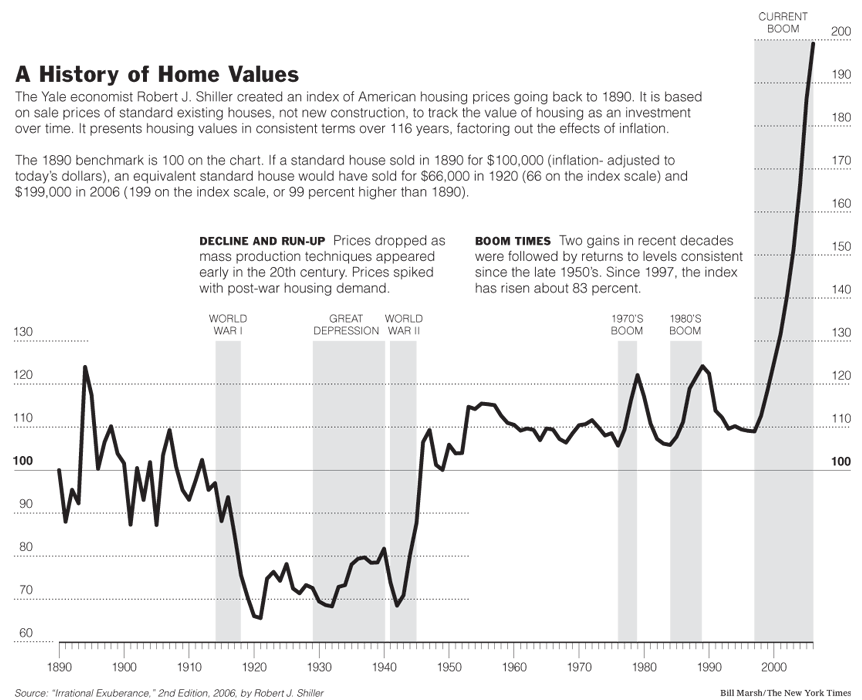
Dieser Chart visualisiert ganz gut, wie überzogen die derzeitigen US-Immobilienpreise im Vergleich eines 116-jährigen, inflationsbereinigten Rückblicks sind. Über eine Zeitstrecke von 100 Jahren wurden Peak-Werte von etwa 125 im Skalenindex niemals überschritten - dann erfolgte der hyperbolische Anstieg auf jetzt 199 (Klick auf Bild vergrößert die Grafik). Angesichts der Fallhöhe fragt man sich auch unwillkürlich, wie man von da oben eine "sanfte Landung" hinbekommen will.
Unter der noch kuscheligen Annahme, dass der Peakwert sich zumindest wieder auf den üblichen 125er Wert zurückbewegt, kann man sich gut vorstellen, welche Auswirkung eine solche Vermögensvernichtung auf Kaufkraft, Stimmung und Unternehmenserträge hat. Sollte das Pendel dann durch die Liquidationsspirale (Zwangsversteigerungen durch Kreditgeber) nach unten noch zur anderen Seite ausschlagen (z.B. Indexwerte von 70), ist eine Rezession, zumindest aber die Angst vor ihr, sehr wahrscheinlich.
OnceHush!
http://immobilienblasen.blogspot.com/2006/08/...desaster-barrons.html
gruß
sparki
http://immobilienblasen.blogspot.com/
Fondsmanager schichten Portfolios im August kaum um
Aktien - vor allem europäische Werte - rangieren in der Beliebtheitsskala der Profis weiter ganz oben.
Frankfurt/Main - Deutsche Fondsmanager haben sich im Ferienmonat August mit Umschichtungen in ihren Portfolios zurückgehalten. Auch die Favoriten der Fondsmanager blieben nach einer Reuters-Umfrage die gleichen: So rangieren Aktien in der Beliebtheitsskala der Fondsmanager ganz oben. "Wir raten dazu, Aktien weiter überzugewichten", sagte Hans-Jörg Naumer, Leiter Kapitalmarktanalyse bei der Fondsgesellschaft Dit. "Viele negative Aspekte, wie Angst vor der Inflation, steigende Zinsen und Sorgen um eine deutliche Konjunkturabschwächung, sind in den Kursen schon enthalten."
Der Anteil an Aktien in den Portfolios der 14 Befragten betrug im August 46,26 (Juli 46,73) Prozent. In Renten legten sie 27,40 (29,13) Prozent an, der Bestand an Barmitteln belief sich auf 19,27 (19,14) Prozent. Knapp die Hälfte der Fondsmanager will in den kommenden drei Monaten die Gewichtung von Aktien ausbauen
Anlageexperte Naumer setzt vor allem auf europäische Aktien und ist mit dieser Einschätzung nicht allein. Rund zwei Drittel der Befragten haben europäische Aktien in ihren Portfolios übergewichtet. "Unser Favorit ist Euroland, weil die Bewertung sehr attraktiv ist und die Gewinne sich stabil entwickeln", sagte Naumer.
Optimistisch zeigen sich die Fondsmanager auch für Japan. "Unserer Einschätzung nach wird sich das Wachstum dort beschleunigen. Die Binnennachfrage und die Investitionen ziehen deutlich an. Unterstützend ist auch der aktuelle Wechselkurs", sagte Michael Herzum von Union Investment.
Bei Dividendenpapieren aus den USA sind die Anlageexperten auf kurze Sicht etwas skeptischer. Den Anteil an Aktien aus Nordamerika in den Portfolios haben sie im August von 12,34 auf 8,84 Prozent gesenkt. Herzum verweist jedoch auch auf einen Pluspunkt: "Der US-Aktienmarkt hat sich im vergangenen Jahr schlechter entwickelt als die anderen großen Märkte, von daher ist die Bewertung wieder attraktiver."
Artikel erschienen am Fr, 1. September 2006
Artikel drucken
© WELT.de 1995 - 2006
Genau deshalb schossen im Frühjahr 2000, auf dem Höhepunkt der Dot.com/Tech-Blase, Technologie und "Telekom"-Fonds wie Pilze aus dem Boden. Es waren, wie wir heute wissen, Gift-Pilze, denn der Nasdaq hat vom damaligen Stand von 5000 bis zum gestrigen Schlusskurs von 2183 exakt 56 % verloren - und da sind die "Gewinnsteigerungen" der letzten drei Hurra-Jahre schon enthalten!
Die Zahlen darin sind so beängstigend, dass ich sie hier noch einmal rauskopiert habe:
32.6% of new mortgages and home-equity loans in 2005 were interest only, up from 0.6% in 2000
43% of first-time home buyers in 2005 put no money down
15.2% of 2005 buyers owe at least 10% more than their home is worth
10% of all home owners with mortgages have no equity in their homes
$2.7 trillion dollars in loans will adjust to higher rates in 2006 and 2007.
Der Knackpunkt sind die beiden von mir fett hervorgehobene Sätze, da sie unweigerlich Zwangsversteigerungen nach sich ziehen.
Kass schreibt, dass die Bullen seit der Erholung vom Juni-Tief das Zepter fest in der Hand haben, doch dass die technische Entwicklung der Märkte nicht im Einklang mit der fundamentalen steht. So bleibt er - trotz Verlusten - bärisch: "Der Markt ist eine wankelmütige Verführerin, und die wachsenden Gefahren für die Firmengewinne zu ignorieren könnte sich als schlecht für die finanzielle Gesundheit erweisen." (unten, fett)
Investing
Bears Have Fight Left
By Doug Kass
Street Insight Contributor
8/31/2006 12:20 PM EDT
Surprisingly (at least to me), the market averages appear to be headed toward their second best month of the year, experiencing higher returns in 10 out of the last 11 months (a streak that even New York Yankee shortstop Derek Jeter would admire).
Meanwhile, on the fundamental front, the rate of growth in economic activity continues to moderate. Even the Federal Reserve is recognizing this development, as evidenced by its pause this month.
Despite protestations from a number of corners, retail activity shows signs of weakness. The consumer's overconsumption binge is growing long in the tooth ["Überkonsum"-Gelage neigt sich dem Ende zu], as his levered balance sheet (increasingly reliant on the appreciation of homes and equities) is being weighed down by not only the impact of 17 tightenings, but also by the speculative air being taken out of the housing bubble.
Same-stores sales (especially in real terms and adjusted for the recently rising apparel inflation) reported last night and this morning are proof positive of a slowdown that, coupled with plummeting consumer confidence, is almost impossible to ignore.
Moreover, as reported recently, real median wages are showing no signs of improvement [Löhne stagnieren], and with the probable reduction in construction-related jobs in the months to come, job growth will likely disappoint.
The hard landing of real estate has only begun to be felt, as the downturn is still less than a year old and new housing starts have dropped by only about 15% from their fall 2005 peak. In past down cycles, the duration of the downturn has been between 25 and 52 months, and in terms of unit declines has averaged approximately 52% from peak to trough. So, stated simply, the worst is yet to come for housing, and with it, the typical adverse multiplier effect on the rest of the economy.
For now, the market's technicals belie the fundamental direction of the economic contraction and the likely drop in corporate profit margins (which should lead to revisions in corporate profitability in late 2006 and for 2007). Sentiment, as Gary "The Other" Smith points out repeatedly, remains poor (a residue of the May-June swoon) and has buoyed equities this summer.
While it can be argued that the impressive rise from the June lows has now contributed to a growing complacency among market participants, the bulls remain very much in command.
But the market, as we have recently observed, is a fickle temptress [wankelmütige Verführerin], and ignoring the rising economic and corporate profit threats might turn out to be injurious to one's financial health.
In the face of a clear pattern of upside momentum I remain steadfastly bearish (and bruised!) -- and I continue to fight the "good" fight.
vor allem auch auf skeptisch in sachen us bilanzrisiken bei banken
seit müßt ihr das gelesen haben
http://immobilienblasen.blogspot.com/2006/09/...iness-week-cover.html
Option ARMs geben dem Hauskäufer die Option/Wahlmöglichkeit (daher der Name), eine Zeitlang weniger zu zahlen, als es dem eigentlich monatlich fälligen Schuldzins entspricht, dafür aber nach Ablauf dieser Zeitspanne umso mehr. Viele naive Hauskäufer sahen nur die kurzfristig niedrigere Belastung und kauften die sündhaft überteuerten Häuser, z. B. in Kalifornien, die auf diese Weise für Sie scheinbar erschwinglich wurden. Das Kleingedruckte der Verträge lasen viele gar nicht (siehe Fallbeispiele im Text). Zwei oder drei Jahre später wird die reguläre Rate fällig - erhöht um den Betrag, der anfangs scheinbar gespart wurde. Hinzu kommt, dass die Hypotheken-Zinsen variabel sind (ARM steht für "adjustable rate mortgage"), so dass nach 17 Fed-Zinserhöhungen in Folge die Zinszahlungen nun entsprechend höher aufallen.
Folge: Für viele Naivlinge, die am Ende der Housing-Blase die "Chance ihres Lebens" in Form einer option-ARM-Finanzierung witterten, wird der Amerikanische Traum in einem Alptraum enden. Die fälligen Zinsen auf die teils Millionen Dollar teuren Hauskäufe fressen sie förmlich auf. Da sie zudem oft kein Eigenkapital hatten, gleichzeitig der Wert des Hauses durch Platzen der Immo-Blase aber bereits unter ihren Einstandspreis gefallen ist, bleibt nur der Ausweg der Zwangsversteigerung. Refinanzieren zu faireren Konditionen können sie auch nicht, weil die - teils betrügerischen - ARM-Verträge im Falle einer vorzeitigen Kündigung "penalties" (Strafgebühren) von bis über 10.000 Dollar verlangen.
Falle zu, Affe tot.
Banken können die Phantom-Gewinne aus diesen "deferred interest"-Geschäften (siehe Text, unten) sogar als reguläre Gewinne buchen, obwohl äußerst fraglich ist, ob sie das Geld von den schwachen Schuldnern jemals erhalten werden. Dies ist einer der Gründe für die jüngste Schwäche im US Banking Index (BKX), dem wankende Regionalbanken bereits zusetzen. Das Risiko für diese Luft-Nummern-Geschäfte wird an Wall Street (Hedgefonds) weitergereicht, die es in Form von Derivaten kaufen. Kein Wunder, dass Warren Buffett Derivate als "Massenvernichtungsmittel der Finanzwirtschaft" bezeichnet hat.
Ein Immobilienspezialist sagt für die nächsten 5 Jahre Kreditausfälle in Höhe von 300 Milliarden Dollar voraus. Die Hauptlast tragen "kleine Leute", die von Banken und Brokern teils wissentlich zu den Risiken belogen werden.
Business Week (print)
SEPTEMBER 11, 2006
COVER STORY
Nightmare Mortgages
They promise the American Dream: A home of your own -- with ultra-low rates and payments anyone can afford. Now, the trap has sprung
For cash-strapped homeowners, it was a pitch they couldn't refuse: Refinance your mortgage at a bargain rate and cut your payments in half. New home buyers, stretching to afford something in a super-heated market, didn't even need to produce documentation, much less a downpayment.
Those who took the bait are in for a nasty surprise. While many Americans have started to worry about falling home prices, borrowers who jumped into so-called option ARM loans have another, more urgent problem: payments that are about to skyrocket.
The option adjustable rate mortgage (ARM) might be the riskiest and most complicated home loan product ever created. With its temptingly low minimum payments, the option ARM brought a whole new group of buyers into the housing market, extending the boom longer than it could have otherwise lasted, especially in the hottest markets. Suddenly, almost anyone could afford a home -- or so they thought. The option ARM's low payments are only temporary. And the less a borrower chooses to pay now, the more is tacked onto the balance.
The bill is coming due. Many of the option ARMs taken out in 2004 and 2005 are resetting at much higher payment schedules -- often to the astonishment of people who thought the low installments were fixed for at least five years. And because home prices have leveled off, borrowers can't count on rising equity to bail them out. What's more, steep penalties [hohe Rücktrittsgebühren] prevent them from refinancing. The most diligent home buyers asked enough questions to know that option ARMs can be fraught with risk. But others, caught up in real estate mania, ignored or failed to appreciate the risk.
There was plenty more going on behind the scenes they didn't know about, either: that their broker was paid more to sell option ARMs than other mortgages; that their lender is allowed to claim the full monthly payment as revenue on its books even when borrowers choose to pay much less; that the loan's interest rates and up-front fees might not have been set by their bank but rather by a hedge fund; and that they'll soon be confronted with the choice of coughing up higher payments or coughing up their home. The option ARM is "like the neutron bomb," says George McCarthy, a housing economist at New York's Ford Foundation. "It's going to kill all the people but leave the houses standing."
Because banks don't have to report how many option ARMs they underwrite, few choose to do so. But the best available estimates show that option ARMs have soared in popularity. They accounted for as little as 0.5% of all mortgages written in 2003, but that shot up to at least 12.3% through the first five months of this year, according to FirstAmerican LoanPerformance, an industry tracker. And while they made up at least 40% of mortgages in Salinas, Calif., and 26% in Naples, Fla., they're not just found in overheated coastal markets: Through Mar. 31 of this year, at least 51% of mortgages in West Virginia and 26% in Wyoming were option ARMs. Stock and bond analysts estimate that as many as 1.3 million borrowers took out as much as $389 billion in option ARMs in 2004 and 2005. And it's not letting up. Despite the housing slump, option ARMs totaling $77.2 billion were written in the second quarter of this year, according to investment bank Keefe, Bruyette & Woods Inc.
The First Wave
After prolonging the boom, these exotic mortgages could worsen the bust. They also betray such a lack of due diligence on the part of lenders and borrowers that it raises questions of what other problems may be lurking. And most of the pain will be borne by ordinary people, not the lenders, brokers, or financiers who created the problem.
FALLBEISPIEL: Gordon Burger, Polizist: - A.L.]
Gordon Burger is among the first wave of option ARM casualties. The 42-year-old police officer from a suburb of Sacramento, Calif., is stuck in a new mortgage that's making him poorer by the month. Burger, a solid earner with clean credit, has bought and sold several houses in the past. In February he got a flyer from a broker advertising an interest rate of 2.2%. It was an unbeatable opportunity, he thought. If he refinanced the mortgage on his $500,000 home into an option ARM, he could save $14,000 in interest payments over three years. Burger quickly pulled the trigger, switching out of his 5.1% fixed-rate loan. "The payment schedule looked like what we talked about, so I just started signing away," says Burger. He didn't read the fine print.
After two months Burger noticed that the minimum payment of $1,697 was actually adding $1,000 to his balance every month. "I'm not making any ground on this house; it's a loss every month," he says. He says he was told by his lender, Minneapolis-based Homecoming Financial, a unit of Residential Capital, the nation's fifth-largest mortgage shop, that he'd have to pay more than $10,000 in prepayment penalties to refinance out of the loan. If he's unhappy, he should take it up with his broker, the bank said. "They know they're selling crap, and they're doing it in a way that's very deceiving," he says. "Unfortunately, I got sucked into it." In a written statement, Residential said it couldn't comment on Burger's loan but that "each mortgage is designed to meet the specific financial needs of a consumer."
The loans certainly meet the needs of banks. Option ARMs offer several payment choices each month. Among Burger's alternatives were one for $2,524, about what a standard fixed-rate mortgage would be on the new amount, and the $1,697 he pays. Why would his bank make the minimum so low? Thanks to a perfectly legal accounting practice, no matter how little Burger pays each month, the bank gets to record the full amount.
Option ARMs were created in 1981 and for years were marketed to well-heeled home buyers who wanted the option of making low payments most months and then paying off a big chunk all at once. For them, option ARMs offered flexibility.
So how did these unusual loans get into the hands of so many ordinary folks? The sequence of events was orderly and even rational, at least within a flawed system. In the early years of the housing boom, falling interest rates made safe fixed-rate loans attractive to borrowers. As home prices soared, banks pushed adjustable-rate loans with lower initial payments. When those got too pricey, banks hawked loans that required only interest payments for the first few years. And then they flogged option ARMs -- not as financial-planning tools for the wealthy but as affordability tools for the masses. Banks tapped an army of unregulated mortgage brokers to do what needed to be done to keep the money flowing, even if it meant putting dangerous loans in the hands of people who couldn't handle or didn't understand the risk. And Wall Street greased the skids by taking on much of the new risk banks were creating.
[Hier zeigt sich mal wieder die schlummernde Gefahr der Derivate-Wirtschaft - A.L.]
Now the signs of excess are crystal clear. Up to 80% of all option ARM borrowers make only the minimum payment each month, according to Fitch Ratings. The rest of the money gets added to the balance of the mortgage, a situation known as negative amortization. And once balances grow to a certain amount, the loans automatically reset at far higher payments. Most of these borrowers aren't paying down their loans; they're underpaying them up.
Yet the banking system has insulated itself reasonably well from the thousands of personal catastrophes to come. For one thing, banks can sell some of their option ARMs off to Wall Street, where they're packaged with other, better loans and re-sold in chunks to investors. Some $182 billion of the option ARMs written in 2004 and 2005 and an additional $83 billion this year have been sold, repackaged, rated by debt-rating agencies, and marketed to investors as mortgage-backed securities, says Bear, Stearns & Co. (BSC). Banks also sell an unknown amount of them directly to hedge funds and other big investors with appetites for risk.
The rest of the option ARMs remain on lenders' books, where for now they're generating huge phantom profits for some lenders. That's because, according to generally accepted accounting principles, or GAAP, banks can count as revenue the highest amount of an option ARM payment -- the so-called fully amortized amount -- even when borrowers make only the minimum payment. In other words, banks can claim future revenue now, inflating earnings per share.
For many industries, so-called accrual accounting, which lets companies book sales when they contract for them rather than when they receive the cash, makes sense. The revenues will eventually come. But accrual accounting doesn't apply well to option ARMs, since it's more difficult to know if unpaid interest will ever cross a banker's desk. "This is basically an IOU that may never get paid," says Robert Lacoursiere, an analyst at Banc of America Securities. James Grant of Grant's Interest Rate Observer recently wrote that negative-amortization accounting is "frankly a fraudulent gambit. But what it lacks in morality, it compensates for in ingenuity." The Financial Accounting Standards Board, which is responsible for keeping GAAP up to date, stands by its standard but told BusinessWeek in a written statement that it is "concerned that the disclosures associated with these types of loans [are] not providing enough transparency relative to their associated risks."
Camouflaged Losses
Risks or not, the accounting treatment is boosting reported profits sharply. At Santa Monica (Calif.)-based FirstFed Financial Corp. (FED ), "deferred interest" -- what an outsider might call phantom income -- made up 67% of second-quarter pretax profits. FirstFed did not respond to requests for comment. At Oakland (Calif.)-based Golden West Financial Corp. (GDW ), which has been selling option ARMs for two decades, deferred interest made up about 59.6% of the bank's earnings in the first half of 2006. "It's not the loan that's the problem," says Herbert M. Sandler, CEO of World Savings Bank, parent of Golden West. "The problem is with the quality of the underwriting."
In the middle of one of the hottest U.S. markets, Coral Gables (Fla.)-based BankUnited Financial Corp. (BKUNA ) posted a $14.8 million loss for the quarter ended June, 2005. Yet it reported record profits of $23.8 million for the quarter ended in June of this year -- $20.9 million of which was earned in deferred interest. Some 92% of its new loans were option ARMs. Humberto L. Lopez, chief financial officer, insists the bank underwrites carefully. "The option ARMs have gotten a bit of a raised eyebrow because we generate and book noncash earnings. But...it's our money, and we do feel comfortable we'll get it back."
Even the loans that blow up can be hidden with fancy bookkeeping. David Hendler of New York-based CreditSights, a bond research shop, predicts that banks in coming quarters will increasingly move weak loans into so-called held-for-sale accounts. There the loans will sit, sequestered from the rest of the portfolio, until they're sold to collection agencies or to investors. In the latter case, a transaction on an ailing loan registers on the books as a trading loss, gets mixed up with other trading activities and -- presto! -- it vanishes from shareholders' sight. "There are a lot of ways to camouflage the actual experience," says Hendler.
[ZWEITES FALLBEISPIEL - A.L.]
There's no way to camouflage what Harold, a former computer technician who asked BusinessWeek not to publish his last name, is about to face. He's disabled and has one source of income: the $1,600 per month he receives in Social Security disability payments. In September, 2005, Harold refinanced out of a fixed-rate mortgage and into an option ARM for his $150,000 home in Chicago. The minimum monthly payment for the first year is $899, which he can afford. The interest-only payment is $1,329, which he can't. The fully amortized payment is $1,454, which his lender, Washington Mutual (WaMu), gets to count on its books. WaMu, no fly-by-night operation, said it couldn't comment on Harold's case, citing confidentiality issues. A spokesman says the bank "accounts for its option ARM product in accordance with generally accepted accounting principles." WaMu has about $12 billion in loans negatively amortizing right now, up from $2.5 billion in 2005, estimates CreditSights' Hendler. In a written statement, WaMu said "borrowers who request an adjustable loan with payment options should understand those options and potential adjustments throughout the life of the loan. We make detailed disclosures to customers that are designed to develop a more informed consumer of mortgage products and ensure that our customers are comfortable with the loan products they select."
Hard Sell
To get the deals done, banks have turned increasingly to unregulated mortgage brokers, who now account for 80% of all mortgage originations, double what it was 10 years ago, according to the National Association of Mortgage Brokers. In 2004 banks began offering fatter sales commissions on option ARMs to encourage brokers to push them, says Gail McKenzie, assistant U.S. attorney in Atlanta, who is investigating mortgage brokers for improper practices.
The problem, of course, is that many brokers care more about commissions than customers. They use aggressive sales tactics, harping on the minimum payment on an option ARM and neglecting to mention the future implications. Some even imply verbally that temporary teaser rates of 1% to 2% are permanent, even though the fine print says otherwise. It's easy to confuse borrowers with option ARM numbers. A recent Federal Reserve study showed that one in four homeowners is mystified by basic adjustable-rate loans. Add multiple payment options into the mix, and the mortgage game can be utterly baffling.
[DRITTES FALLBEISPIEL - A.L.]
Billy and Carolyn Shaw are among the growing ranks of borrowers who have taken out loans they say they didn't understand. The retired couple from the Salinas (Calif.) area needed to tap about $50,000 in equity from their $385,000 home to cover mounting expenses. Billy, 66, a retired mechanic, has diabetes. Carolyn, 61, has been caring for her grandchildren, 10-year-old twins, since her daughter's death in 2000. The Shaws have a fixed income of $3,000 a month that will fall by about $1,000 in November after Billy's disability benefits run out. Their new loan's minimum payment of about $1,413 is manageable so far, but the fully amortized amount of about $3,329 is out of the question. In a little over a year, they've added some $8,500 to their loan balance and now face a big reset if they continue to pay only the minimum. "We didn't totally understand what was taking place," says Carolyn. "You have to pay attention. We didn't, and we're really stuck here." The Shaws' lender, Golden West, says it routinely calls customers to ask them if they are happy and understand their mortgage loan.
Then there's the illegal stuff. Mortgage fraud is one of the fastest-growing white-collar crimes in the nation, costing $1 billion in 2005, double the year before. A slower housing market could foster more wrongdoing. "With a tighter market, you are going to find there is more incentive to manipulate," says Tim Irvin of Irvin Investigations & Research Services in Spring, Texas. "Brokers are having a harder time getting business, so they're getting creative."
Concerns like these haven't curbed Wall Street's hunger for option ARMS. "At a price, you can originate or sell anything," says Thomas F. Marano, global head of mortgage and asset-backed securities at Bear Stearns. Hedge funds have been particularly active, buying risky loans directly from banks and cutting out the bundlers in the middle. Kathleen C. Engel, an associate professor of law at Cleveland-Marshall College of Law at Cleveland State University, says Wall Street and hedge fund money has helped to finance widespread lending abuses, particularly among the most vulnerable borrowers.
Pros Go Unscathed
Why are hedge funds willing to buy risky loans directly? Because they can demand terms that help insulate them from losses. And banks, knowing what the hedge funds want in advance, simply take it out of the hides of borrowers, many of whom qualify for lower rates based on their credit histories. "Even if the loan goes bad, [the hedge funds are] still making money hand over fist," says Engel.
Eventually, some of it will go sour. But the Wall Street pros who buy option ARMs are in the business of managing risk, and no one expects widespread losses. They've taken on billons in iffy option ARMs, but the loans are no shakier than the billions in emerging market debt or derivatives they buy and sell all the time. Blowups are factored into the investing decision.
Banks that hold lots of option ARMs on their books will surely be hit by loan defaults in coming years. "It's certainly reasonable to expect to see some excesses wrung out," says Brad A. Morrice, president and CEO of New Century Financial Corp. But even here the damage will likely be limited. Banks use insurance and other financial instruments to protect their portfolios, and they hold real assets -- homes -- as collateral. Christopher L. Cagan, director of research and analytics at First American Real Estate Solutions, a researcher and unit of title insurer First American, forecasts total defaults of $300 billion across all types of loans, not just option ARMs, over the next five years -- less than 1% of total homeowner equity. (In comparison, JPMorgan Chase & Co. alone has a mortgage portfolio of $182.8 billion.) Cagan estimates that banks will end up losing only $100 billion of it all told.
Most of the pain will be born by ordinary people. And it's already happening. More than a fifth of option ARM loans in 2004 and 2005 are upside down -- meaning borrowers' homes are worth less than their debt. If home prices fall 10%, that number would double. "The number of houses for sale is tripling in some markets, so people are not going to get out of their debt," says the Ford Foundation's McCarthy. "A lot are going to walk."
[VIERTES FALLBEISPIEL]
Jennifer and Eric Hinz of Somerset, Wis., are feeling the squeeze. They refinanced out of a 5.25% fixed-rate, 30-year loan in June, 2005, and into an option ARM with a 1% teaser rate from Indymac Bank [Der Kurs von NDE fiel gerade stark! - A.L.] . The $1,483 payment for their original mortgage dropped to as low as $747 with the new option ARM. They say they had no idea when they signed up, however, that the low payment adds $600 in deferred interest to their balance every month. Worse, they thought the 1% would last three years, but they're already paying 7.68%. "What reasonable human being would ever knowingly give up a 5.25% fixed-rate for what we're getting now?" says Eric, 36, who works in commercial construction. Refinancing is out because they can't afford the $15,000 or so in fees. "I'm paying more, and the interest is just going up and up and up," says Jennifer, 34, a stay-at-home mom. "I feel like we got totally screwed." They say their mortgage broker has stopped returning their phone calls. Indymac declined to comment on the loan's specifics.
Stories like these can be found across the socioeconomic spectrum, says Allen J. Fishbein, director of Housing & Credit Policy for the Consumer Federation of America. In a May focus group, the CFA found that option ARM customers at all income levels said the loans were the only way they could afford their homes. While many recognized that their mortgages could increase, "they professed complete surprise that they could increase as much as they could," says Fishbein. That lack of diligence will cost them over time.
Not that all option ARM holders go in blindly. While the loans are marketed aggressively, plenty of holders know exactly what they're getting into. Jon and Meghan Bachman of Portland, Ore., consider them wealth-building tools. "We want to own a bunch of houses," says Meghan. "We're hoping for early retirement."
So far they have stayed out of the fire. The couple, who are in their 30s, bought their first home, a 100-year-old farm house in Portland, Ore., in October, 2005, with a no-money-down loan for $200,000 from GreenPoint Mortgage, a unit of NorthFork Bancorporation Inc. By May, the value of the house had soared to $275,000. Rather than sit tight as their grandparents might have, the Bachmans, with an annual household income of $70,000, took out a home equity loan to put a $30,000 downpayment on an investment property in an up-and-coming neighborhood nearby. They pay a minimum of just $825 on their new $191,000 mortgage, and rent the house out for $100 more than that. Sooner or later, the payment will rise. Then they'll have to raise the rent to stay in the black. [Inflation! - A.L.] If the still-strong Portland housing market tanks, they could find themselves in deep trouble. It's a risk they say they're willing to take.
Public policy has yet to catch up with the new complexities of the lending industry. Comptroller of the Currency John C. Dugan, the banking industry's main regulator, wants banks to clean up their act. A source inside the federal Office of the Comptroller says Dugan intends to raise lending standards, as he did last year on credit cards, where super-low minimum payments made it improbable that cardholders would ever pay down debts. New guidelines are expected this fall.
Fair-housing pundits suggest that mortgage lenders follow the lead of the securities industry and require that mortgage borrowers be not only eligible for a product but also suitable -- meaning the loan won't impose hardship. Says Consumer Federation of America's Fishbein: Buyers have to have a "reasonable prospect of being able to handle the payments, not at the initial rate, but [assuming] the worst-case scenario."
So far, banks have shown little desire to raise their standards. In February, Golden West announced it would raise its minimum option ARM payment to 2.6% of the loan. In March, Golden West's Sandler wrote a nine-page letter to the Office of Thrift Supervision decrying the lax lending standards he was seeing. "Foolish lenders who eventually stumble under the weight of their missteps will bring down innocent borrowers with them and leave the rest of us to clean up the mess," he wrote. But on May 7, Golden West announced it was selling out to Charlotte (N.C.)-based Wachovia Corp. (WB ). By June it had dropped its option ARM rate back down to 1.50%. Sandler says the rates were changed according to the bank's interest rate outlook.
Analyst Frederick Cannon of Keefe Bruyette & Woods says most banks don't apologize for their option ARM businesses. "Almost without exception everyone says [the option ARM] is a great loan, it's plenty regulated, and don't bug us," he says. In an April letter to regulators, Cindy Manzettie, chief credit officer for Fifth Third Bank in Cincinnati, said it's not the "lender's responsibility to help the consumer determine the appropriate payment option each month.... Paternalistic regulations that underestimate the intelligence of the American public do not work."
By Mara Der Hovanesian
0637covdc.gif
95% aller geschaffenen stellen sind mittels des nicht nachzuvollziehbaren
birth/death modells geschätzt worden.
enron lebt
http://immobilienblasen.blogspot.com/2006/09/...istik-enron-lebt.html